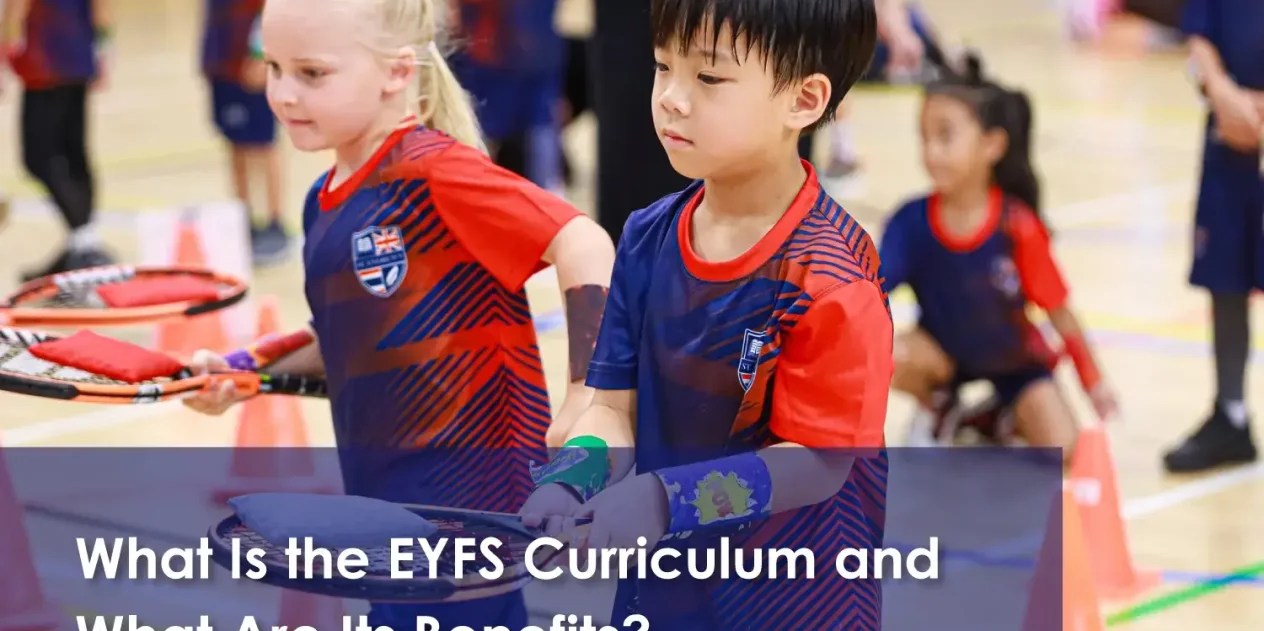
EYFS is England’s framework for early childhood learning and development. It places greater emphasis on children’s holistic development than on learning through memorisation or completing tests alone.
In this article, we explore what is EYFS, how the EYFS curriculum supports children through a wide range of activities, which skills young learners can develop, and how the framework contributes to different early years development stages.
What Is the EYFS Curriculum?
The Early Years Foundation Stage, or EYFS, is England’s statutory framework for the learning, development and care of children from birth to the age of 5. The framework provides guidance for educational settings on how to support children appropriately at different stages of development, including their physical, language, emotional, social and cognitive development.
The EYFS meaning is broader than a traditional curriculum. Although the term “EYFS curriculum” is commonly used, EYFS is essentially a framework rather than a fixed programme requiring every child to learn the same content in the same way. Schools can adapt the framework according to the needs of their children, their learning environment and their individual teaching approach.
A key principle of the EYFS British curriculum is that every child is unique and develops at a different pace. Learning should therefore take place through positive relationships, a safe and supportive environment, and activities that encourage children to explore, experiment and learn through hands-on experiences.
This is an important part of having the Early Years Foundation Stage explained clearly. EYFS is not simply about preparing children academically for primary school. It aims to create strong foundations across every aspect of a child’s early development.
The 7 Areas of Learning and Development in the EYFS Curriculum
The 7 Areas of Learning and Development in the EYFS Curriculum form the foundation of children’s learning experiences. The first 3 are known as the Prime Areas, which provide essential foundations for learning and building relationships. The remaining 4 are called the Specific Areas, which help children extend their knowledge, skills and creativity.
One of the key features and teaching approach of EYFS is that these 7 areas are interconnected through everyday experiences, play and a wide variety of learning activities. This allows children to develop naturally across different early years development stages.
The 3 Prime Areas
1. Communication and Language
Children develop listening, speaking, conversation and language comprehension skills through stories, songs, discussions and role play. Teachers encourage children to talk, ask questions and discover new vocabulary so that they gradually become more confident in communicating their needs, ideas and feelings.
Communication also forms the foundation for many other aspects of the EYFS curriculum. When children understand language, they are better able to follow instructions, explain what they observe and make meaningful connections between different experiences.
This area demonstrates how the EYFS British curriculum supports language development through interaction rather than relying solely on formal instruction.
2. Physical Development
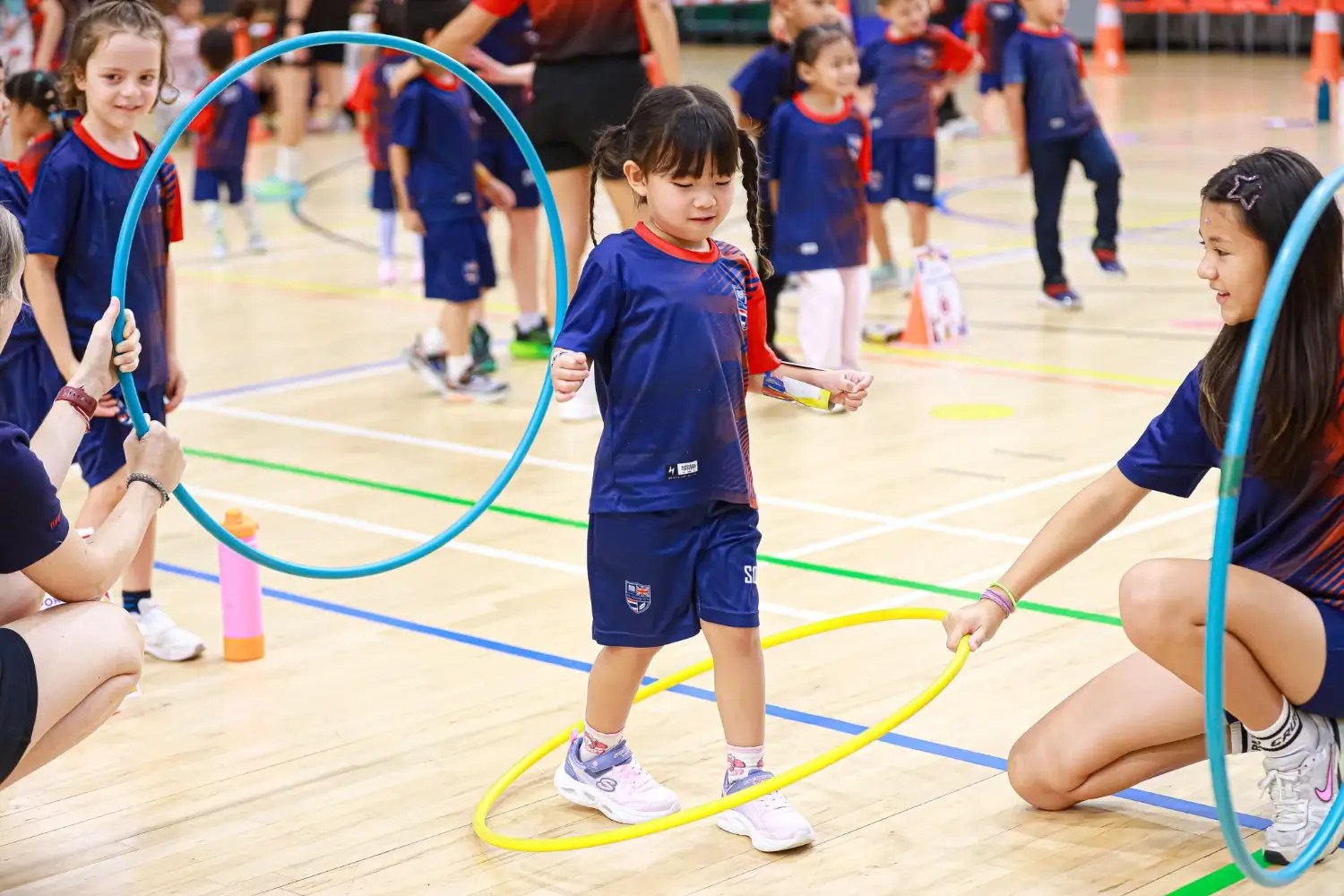
Physical development includes both gross and fine motor skills. Children have opportunities to move their bodies through activities such as running, jumping, climbing, dancing and outdoor play. These experiences help develop strength, balance and physical coordination.
At the same time, activities such as drawing, building with blocks, modelling with playdough, and using scissors appropriately help develop fine motor skills and hand-eye coordination. These abilities are important foundations for writing and for becoming increasingly independent in everyday life.
3. Personal, Social and Emotional Development
Children learn to recognise and understand their own feelings as well as those of others. They also develop skills related to forming relationships, sharing, taking turns and working alongside their peers. Group activities and shared play help children understand simple rules, listen to different ideas and gradually develop ways of resolving disagreements.
Children are also encouraged to become increasingly independent by doing simple tasks for themselves, such as putting away toys, eating independently and taking care of their personal belongings. These experiences help build confidence, responsibility and age appropriate independence.
The 4 Specific Areas
4. Literacy
Literacy within the EYFS curriculum does not mean pushing children to read or write as early as possible. Instead, the focus is on building familiarity with sounds, language, letters, books and ways of expressing ideas through writing.
Children may learn by listening to stories, singing rhyming songs, playing sound games, talking about characters or experimenting with writing letters and simple words. These activities help develop listening, pronunciation, vocabulary recognition and a natural enjoyment of reading.
Literacy therefore develops progressively alongside other early years development stages, rather than being treated as an isolated academic skill.
5. Mathematics
Young children learn mathematical concepts through activities connected to everyday life. These may include counting, comparing sizes, sorting objects and noticing patterns, shapes and positions.
For example:
- Counting toys.
- Sharing snacks with friends.
- Arranging blocks from smallest to largest.
- Identifying shapes during a walk.
These experiences allow children to understand mathematics through real situations while gradually developing reasoning and problem-solving skills.
6. Understanding the World
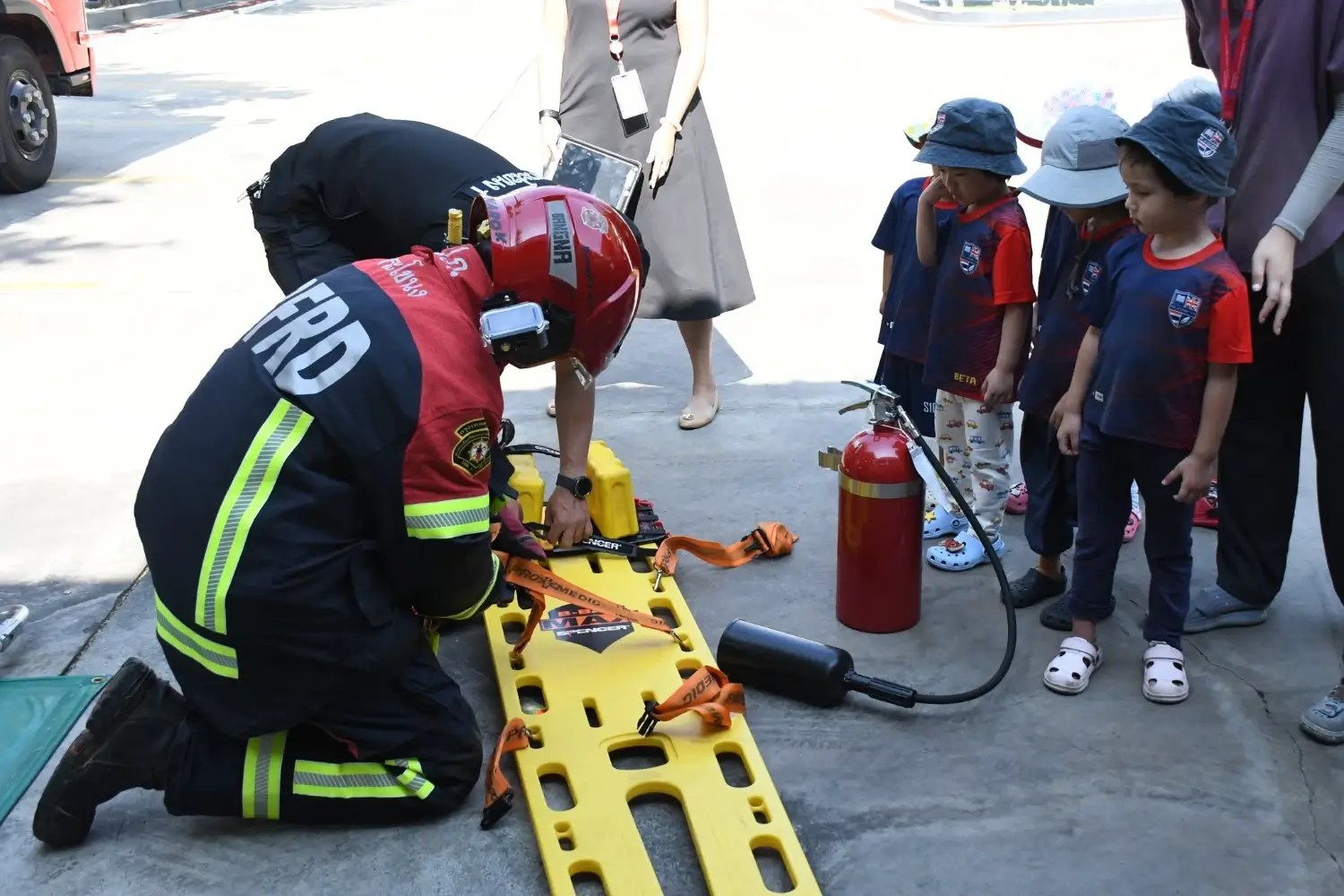
Children learn about nature, people, families, communities, cultures, technology and the world around them through observation, experimentation and asking questions.
They may grow plants, explore insects, observe the weather, learn about different occupations or discover similarities and differences between people from different cultures. These experiences help children understand their surroundings while developing curiosity and logical thinking skills.
7. Expressive Arts and Design
Children have opportunities to express ideas, imagination and emotions through art, music, movement, performance, role play and a variety of creative materials.
Activities in this area do not aim to make every child produce identical or conventionally attractive work. Instead, the focus is on the creative process, giving children opportunities to make choices, experiment and create independently.
Through these experiences, children learn to express themselves, develop creativity and gain greater confidence in presenting their own ideas and creations.
Benefits of the EYFS Curriculum for Early Childhood Development
The EYFS curriculum takes a balanced approach to children’s development during the early years. It recognises that learning does not happen only through reading, writing or mathematics. Children also learn through play, communication, relationships and experiences in the world around them.
1. Children Develop Skills Across Multiple Areas
EYFS does not focus solely on early reading or numeracy. It supports language, physical development, emotional wellbeing, social skills, creativity and understanding of the world at the same time.
This holistic approach reflects the different early years development stages children experience as they grow.
2. Individual Differences Are Respected
Every child has different interests, strengths and learning rhythms. The EYFS British curriculum therefore gives teachers flexibility to observe each child and adapt activities according to their individual developmental needs.
3. Children Build Confidence and Independence
When children are able to choose activities, experiment and try new experiences with appropriate teacher support, they gradually develop greater confidence.
They become more willing to think independently, express their ideas and try unfamiliar things. These opportunities also help children become increasingly independent within the appropriate EYFS age range.
4. Learning Is Connected to Real Life
Children do not learn only from books. They also learn through nature, cooking, art, music, playing with friends and everyday routines.
This connection between learning and real experiences is central to the EYFS curriculum and helps young children understand how their developing skills can be used in everyday situations.
EYFS at St. Andrews Sukhumvit 107
At St. Andrews International School Sukhumvit 107, the Early Years programme is available for children aged 2 to 5, from Nursery through to Reception. The school uses the Early Years Foundation Stage (EYFS) as the main framework for teaching and learning.
Children learn through play, exploration and practical experiences in both indoor and outdoor environments. Teachers provide guidance and support based on each child’s interests and individual pace of development.
Learning covers communication and language, reading, writing, mathematics, art, music, swimming, physical education, Thai language and learning through nature. This approach reflects the broad scope of the 7 areas of learning and development in the EYFS Curriculum while giving children opportunities to apply their skills in different contexts.
The school’s approach also places importance on relationships between children, teachers, friends and families. A warm and safe environment helps children feel that they belong, encourages them to explore their surroundings and supports them in developing age-appropriate skills with confidence.
Frequently Asked Questions About the EYFS Curriculum
1. How is EYFS different from a typical kindergarten programme?
EYFS, or the Early Years Foundation Stage, is England’s framework for early childhood learning and development. It focuses on seven interconnected areas of learning and development rather than concentrating only on memorisation or worksheets.
Read more about the structure of the English National curriculum from EYFS onwards.
2. What is the EYFS age range?
The official EYFS age range in England covers children from birth to 5 years old. At St. Andrews International School Sukhumvit 107, the Early Years programme is available for children aged 2 to 5.
Parents are encouraged to contact the school directly for further information about age requirements and preparing their child to begin school.
3. Does my child need to speak English before starting EYFS?
This is not always the case, children can gradually develop English language skills through stories, songs, games, conversations and everyday classroom routines.
Conclusion
In simple terms, the EYFS refers to an early years framework designed to support children’s holistic development through play, exploration, positive relationships and real life experiences. Understanding the Early Years Foundation Stage in this way helps parents see that EYFS is about much more than preparing children for school. It supports children’s development across seven interconnected areas of learning.
For parents, choosing a school that follows the EYFS British curriculum should involve more than simply checking whether the school states that it uses EYFS. It is also important to consider how the framework is implemented in everyday learning, including the quality of teacher support, the learning environment and the way individual differences between children are recognised.
For parents looking for an international school that places a strong emphasis on learning and development during the early years, St. Andrews International School Sukhumvit 107 is another option worth considering. Parents can book a school visit or register their interest to be contacted by the school. A visit provides an opportunity to experience the learning environment first hand, speak with the teaching team and gain a better understanding of the school’s educational approach before deciding which school is the right fit for their child.